
All Wheel Drive vs 4 Wheel Drive: A Simple Breakdown for Everyday Drivers


When driving through challenging road conditions, the choice of drivetrain system has a direct impact on your driving experience and vehicle’s ability to handle the terrain. 4WD (Four-Wheel Drive) and AWD (All-Wheel Drive) both deliver power to all four wheels, yet they differ fundamentally in their underlying technologies. So, what is all-wheel drive vs four-wheel drive? Let’s start from the core technical principles to unravel the mystery layer by layer.

4-Wheel Drive vs All-Wheel Drive: Different Technical Foundations
4WD (Four-Wheel Drive) and AWD (All-Wheel Drive) may both deliver power to all four wheels, but they are fundamentally different in terms of structure and power distribution.
1. 4WD (Four-Wheel Drive)
l Structural Characteristics: Typically equipped with a transfer case, 4WD systems can manually or automatically distribute power between the front and rear axles. Some models even support locking the center differential to create a hard mechanical link.
l Power Distribution: These systems allow switching between driving modes such as 2WD (two-wheel drive), 4H (high-range four-wheel drive), and 4L (low-range four-wheel drive). In low-range mode, most of the power is sent to the rear axle to enhance off-road capabilities. It’s especially effective on rough, uneven, and muddy terrain.
2. AWD (All-Wheel Drive)
Structural Characteristics: No manual switching is required—AWD systems automatically adjust power based on road conditions. They typically feature a center differential or electronic limited-slip devices and have a more compact design.
Power Distribution:
Full-time AWD: Power is always sent to all four wheels. A common split is 50:50, but this can change dynamically based on conditions.
For example, on smooth roads, it might distribute power 40:60, while in turns or on slippery surfaces, it can rapidly adjust to 30:70 or even more extreme ratios to ensure optimal grip.
On-demand AWD: Normally operates in 2WD mode. When wheel slip is detected, it automatically engages AWD. The power distribution is highly flexible and responsive to traction needs.
What Is the Difference Between AWD and 4WD: Road Suitability Varies
Just like a mountaineer and a city explorer each thrive in their own domains, 4WD and AWD drivetrains offer distinct advantages depending on the road conditions.
1. 4WD (Four-Wheel Drive): Built for Extreme Terrain
In mud, sand, or steep slopes, 4WD truly shines. With its transfer case and differential lock combo, it delivers unmatched off-road performance.
The transfer case distributes torque to all four wheels as needed, while the differential lock engages when slip is detected, maintaining torque output to help the vehicle escape tough spots with ease.
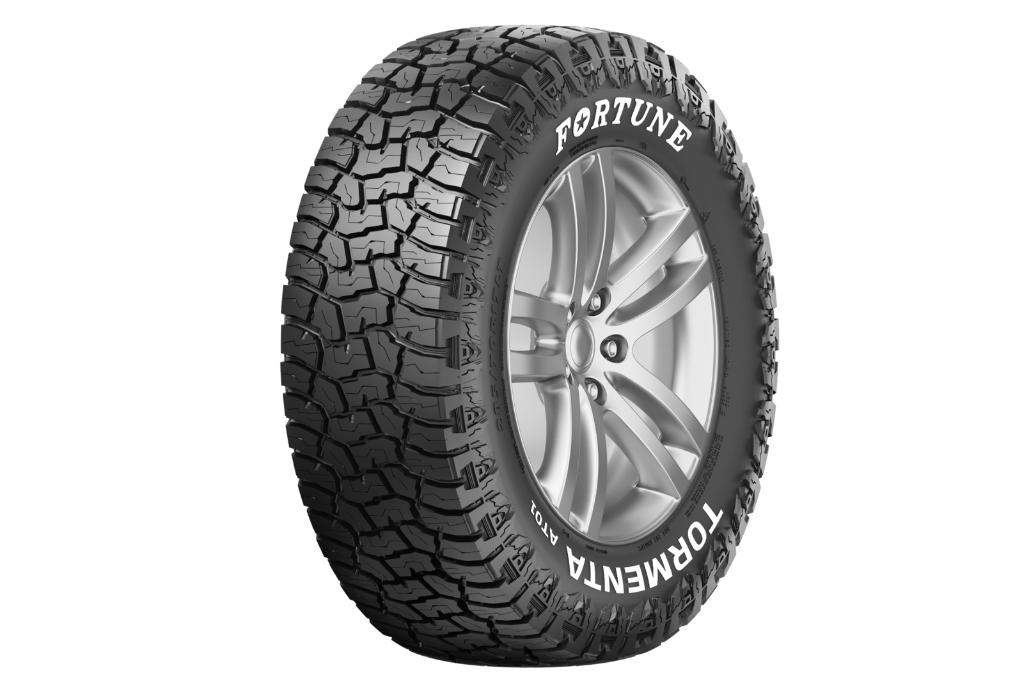
To unlock 4WD’s full off-road potential, tire selection is critical. Take the Tormenta AT01, for instance. Its vertical groove design helps expel sand efficiently and enhances off-road traction while maintaining tread block rigidity.
Beyond that, the Tormenta AT01 features a new wear-resistant compound that resists damage from rugged terrain and increases the tread’s tear resistance. Its stone ejectors at the groove base automatically remove debris, reducing wear and extending the tire’s lifespan.
2. AWD (All-Wheel Drive): Ideal for Roads and Light Off-Road
AWD systems excel on paved roads and mildly unpaved surfaces. Whether driving on rain-soaked highways or gravel mountain paths, they respond quickly and distribute power accurately to each wheel, maintaining firm road grip and improving safety.
During cornering, AWD systems outperform typical 2WD vehicles by maintaining balanced power across all four wheels, reducing tendencies like oversteering or understeering. This gives the driver a smooth, precise, and controllable experience behind the wheel.
AT tires—with their reinforced construction and reliable grip—ensure you stay in control with confidence.
Difference Between 4WD and AWD: Ownership Costs Matter Too
Beyond driving scenarios, fuel consumption and maintenance costs are also important factors to consider when choosing between these two drivetrain types.
1. 4WD (Four-Wheel Drive)
Fuel Efficiency & Weight: Since 4WD powers all four wheels and includes heavier mechanical components, fuel consumption is usually higher than AWD systems.
Other Maintenance: The transfer case, differential locks, and related components in 4WD systems are more complex and require more specialized maintenance—resulting in higher service costs.
2. AWD (All-Wheel Drive)
Fuel Efficiency & Weight: AWD systems can switch to 2WD when full traction isn’t necessary, making them more fuel-efficient overall.
Other Maintenance: With a simpler structure and fewer heavy-duty parts, AWD systems are easier to maintain and generally come with lower maintenance costs.

Conclusion
Choosing between 4WD and AWD is essentially a trade-off between utility and lifestyle. Whether you're pursuing hardcore off-road adventures, seeking everyday comfort for city commuting, or prioritizing safety on complex road surfaces, understanding what all wheel drive vs 4 wheel drive is the only way to match your driving needs with the right system. By grasping how each drivetrain works, you’ll be better equipped to choose a vehicle that truly fits your life.
FAQs
Which Is Better: AWD or 4WD?
There is no absolute winner between all-wheel drive and four-wheel drive. The better choice depends on your usage scenario.
If you prioritize year-round driving stability across changing conditions, AWD is a smart choice.
If you're after an adventurous off-road experience, 4WD is the better fit thanks to its enhanced traction and torque control.
What Type of Vehicles Use 4WD?
4WD systems are primarily found in off-road vehicles and SUVs.
Originally, 4WD was mostly used in rugged, off-road-oriented vehicles, offering powerful torque and high stability for extreme driving conditions.
As technology has advanced, 4WD systems have also been widely adopted in modern urban SUVs, boosting their ability to handle various road types and terrains.
Can I Keep Driving When the 4WD Light Is On?
If the 4WD indicator light turns on, it's not recommended to continue driving without checking the system.
This light usually signals that the four-wheel drive system has either switched to two-wheel drive mode or that there is a system malfunction.
Forcing the vehicle to drive in this condition could damage the drivetrain or transmission components.